
 ru
ru

Diet Protocol
For most of my life, I lived on sweets and soft drinks. Over time - and through a lot of research - I realized how badly that was screwing up my brain. That shift in awareness made me take full control over my diet.
The goal was never to live longer - just to keep my brain sharp and resilient for as long as possible.
What I usually recommend is a four-step transition, instead of going all-in and burning out from weak discipline and old habits:
- Step 1: Learn a bit of food science
- Step 2: Stop eating certain bad things
- Step 3: Start eating certain good things
- Step 4: Learn the right sequence of eating
I followed the same path:
- First step took months - I learned some facts, read some books, and realized that the next step is to either ignore the scientific evidence, or take more responsibility over my reality. Took some time to make myself fully commit.
- Second step came quicker - I wasn’t eating many types of “bad food” already, so it took a couple of months to cut off the rest
- Third step - building new food preferences - took another couple of months
- Last step - optimizing eating order - became habit in just a few weeks

Food-science facts that most influenced my choices
- 75% of chronic diseases are due to diet. Three out of four chronic conditions aren’t bad luck - they come from what you eat every day.
- Sugar doesn’t just mess with your look - it breaks your brain. High sugar and insulin resistance starve brain cells, inflame them, and break their connections. Ignore it in your 30s, and by your 40s–50s the damage builds up fast. What starts as brain fog can end in dementia.
- 90% of serotonin is made in your gut. Your mood, sleep, and motivation all depend on gut health - and ultra-processed food slowly destroys that system.
- Most people live in a state of silent inflammation. Up to 60–70% of adults in industrialized countries show signs of chronic low-grade inflammation, mostly caused by diets full of refined carbs, seed oils, and ultra-processed food.
- One junk meal can cause 4–6 hours of damage. A single fast-food meal can spike inflammation, increase oxidative stress, and reduce blood vessel function - even if you feel “fine.”
- Your food switches genes on or off. Nutrients affect how your genes work. The right foods turn on repair and fat-burning, while the wrong ones turn on fat storage, inflammation, and faster aging.
- Most of your hunger isn’t real. Junk food messes with your brain’s hunger signals and makes you crave more - even when your body doesn’t need anything.
- Every meal shapes how you think, feel, and act in the hours that follow. It’s not just about long-term health - food affects your brain and body today. Say you eat twice a day. That’s two chances to either stay sharp, resilient, and stable - or to mess up your system and wonder why you're tired, unmotivated, moody, or foggy.
- Even the healthiest carb food can be highly damaging if eaten on an empty stomach.
- Even the healthiest carb food can harm if eaten too much.
One book that covers most of these facts: "Good Energy by Dr. Casey Means".

What not to eat
Sugar
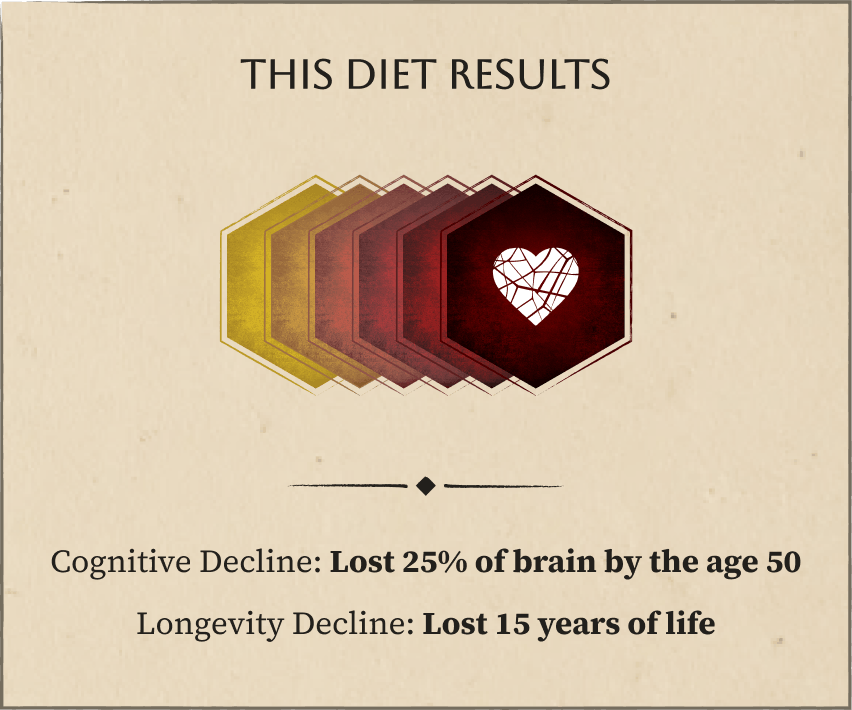
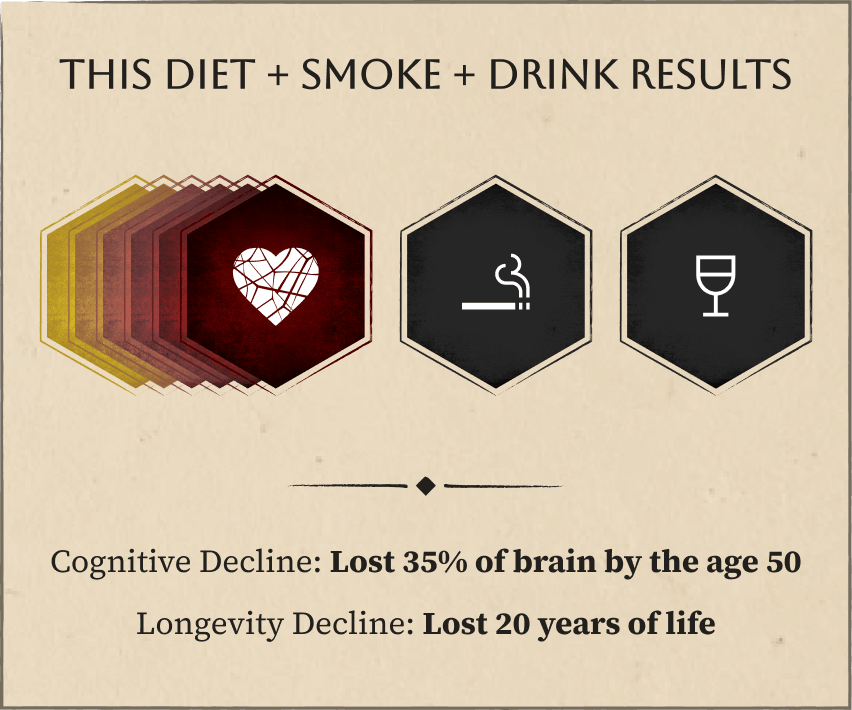
 Damage index: 10/10 (Poison)
Highly addictive, spikes insulin, promotes aging, inflammation, and chronic disease




Seed Oils
Damage index: 9/10 (Highly harmful)High in omega-6, easily oxidized, inflammatory, disrupt cellular metabolism.

Sugary Drinks
Damage index: 8.5/10 (Highly harmful)Liquid sugar = instant metabolic stress. No satiety, fast blood sugar spike.

Ultra-processed foods
Damage index: 8/10 (Highly harmful)Artificial additives, refined carbs, damaged fats, disrupt gut and brain.

White flour products
Damage index: 7.5/10 (Highly harmful)Refined carbs with no fiber, fast glucose release, low nutrient density.

Deceptive "health" foods
Damage index: 6.5/10 (Risky)Marketed as “healthy” but contain hidden sugar, seed oils, or fast carbs.

What to eat
Borderline “OK” Foods
Damage index: 5/10Safe in moderation for healthy people. Watch portions. Not nutrient-dense
Supportive Foods
Damage index: 4/10 (no harm)Mostly clean, whole foods. Mild glycemic load. Good daily fuel
Protective Foods
Damage index: 3/10 (no harm)Whole foods with added benefits - fiber, micronutrients, mild metabolic effect
Clean Nutrients
Damage index: 2/10 (no harm)Dense in nutrients, no blood sugar spike, supports hormones and repair
Metabolic Gold
Damage index: 1/10 (no harm)Dense in nutrients, no blood sugar spike, supports hormones and repair
 Your diet
 Your diet
 Your diet
 Your diet
 Your diet
Your diet - Borderline “OK” Foods

+35% Brain preservation
+20% Years of life gained!
Biological Age:-0 years
Skin Age:-0 years
Joint Age:-0 years
Metabolic Age:-0 years

Generic rules
- Prioritize protein and fat first, then end with carbs.
Start meals with meat, eggs, nuts, or yogurt. Slows glucose spike, increases satiety. - Eat vegetables before carbs
Fiber first blunts blood sugar. Think: salad → then rice or bread. - Chew slowly, eat mindfully.
Put down the phone. Chew 20+ times. Helps digestion, prevents overeating. - Training day nutrition.
Before workout: eat protein for focus and fat burn. After workout: add clean carbs for recovery and growth - from foods in 3/10 and 4/10 categories. For my 70kg weight I often go for one jerky + greek yoghurt + handful of nuts. - Use eating windows
I eat in an 8-hour window - usually two meals and clean snacks (IQ Bar, Bryan Johnson’s protein bar, ChocZero chocolate). It keeps my insulin low and energy stable. - 60-72h fasting
A few times a year I do a 60–72h fast to break food addiction, stabilize hunger signals, improve insulin sensitivity, and give my body a full reset - both physical and mental.
Food choices for Armenia
 🇦🇲 For those who live in Armenia:
- List of non-obvious, healthy products that you can find in Armenian markets: https://docs.google.com/document/d/1NP-Q6Ur7Ntoh5yRdOJjmgHBHYu3ohR7fLKHU-zovVPQ/edit?tab=t.0
- Relatively healthy pizza (36-hour aged whole wheat sourdough starter) https://trizza.am/

Hacks
As someone who lived on sweets throughout all my 20s, getting off that hook wasn’t easy. I ended up spending a lot of time (and money) researching every possible no-sugar sweetener, brand, and food tech hack out there. The goal was simple: find options that are a) sweet, b) taste natural, and c) actually healthy.
Dark chocolate was always an option - but it wasn’t sweet. Some alternatives were sweet and healthy, but tasted fake (e.g., “Stevia”). Eventually, I landed on a shortlist of hacks. Some let me occasionally “cheat” with regular food (like a birthday cake), while others fully replace junk without compromise.
- Berberine before carb-heavy meals
This is a supplement well-known by diabetics. 600-1200mg of Berberine before a heavy carb meal helps blunt the glucose spike, improves insulin sensitivity, and reduces metabolic stress. If I know that I might overeat or there’s a high-glucose something ahead, I take it 15-20 minutes before food. - MonchMonch
This one is a first-of-a-kind supplement designed by Dr. Robert Lustig - world-known endocrinologist who dedicated his entire life to researching of metabolic diseases and sugar. “MonchMonch” is a microscopic fiber sponge that “soaks up” carbs and sugars. Once taken, it expands 70X in your stomach, creating a 3D fiber matrix that entraps sugars, starches, and fats before digestion. Then these trapped carbs bypass digestion and travel to the gut, where they're fermented by microbiome into beneficial short-chain fatty acids. The idea of Dr. Lustig was that people won’t be able to stick to a good discipline, given all the junk on the store shelves, so instead of emphasizing the problem of junk food, he designed the supplement that absorbs the damage from it. - Ka’Chava
Yet another very epic thing. This is a plant-based meal replacement shake that has high-quality protein, fiber, healthy fats, superfoods, probiotics, and other quality nutrients. Can be easily used to replace some of the meals (but definitely not all). Can also be used as a sweet treat, since it is sweet, has multiple flavors, and (subjectively) tasty. - ChocZero brand
Took a while to find, but among all “no sugar” sweets brands, ChocZero’s chocolate is the closest in taste to regular sweet chocolate. What sets it apart is the clean ingredient list, the use of monk fruit extract as a quality sweetener, and a surprisingly high amount of dietary fiber - all without sugar alcohols or junk fillers.. 8/10 for healthiness. Main downside: they don’t sell most of their sweets on hot seasons due to instability of the formula - apparently the sweets get screwed under mild heat. - Monk Fruit sweetener
This one’s a subjective choice. After digging into healthy, calorie-free sweeteners, I shortlisted Stevia, Erythritol, Allulose, and Monk Fruit. Stevia tastes too artificial to me, and both - pure Erythritol and Allulose mess with my digestion - so Monk Fruit wins. An interesting detail here: Dr. Robert Lustig points out that even calorie-free sweeteners can trigger a brain response - the sweet taste alone signals the pancreas to release insulin. It’s called the cephalic phase insulin response. The effect is small, but it’s real - and depends on the type of sweetener and your individual sensitivity. - Extra virgin olive oil
I use Bryan Johnson’s “Snake Oil” (high-grade extra virgin olive oil) everywhere, in small doses. While it’s not ideal for high-heat frying due to its low smoke point, I’ve found that with the right stovetop setting, it works perfectly fine for medium-heat cooking. You just need to dial in the sweet spot-hot enough to cook, low enough to protect the oil’s integrity.