
 en
en

One AI agent is a tool. Ten AI agents is a career.
If you're using an LLM just as a side-window helper to your existing workflow, you're about to lose.
I've been keeping myself from writing on AI and LLM topics because there are too many moving parts. But what I'll say here has crystallized enough that I'm certain the essence won't change — not now, not with later developments.
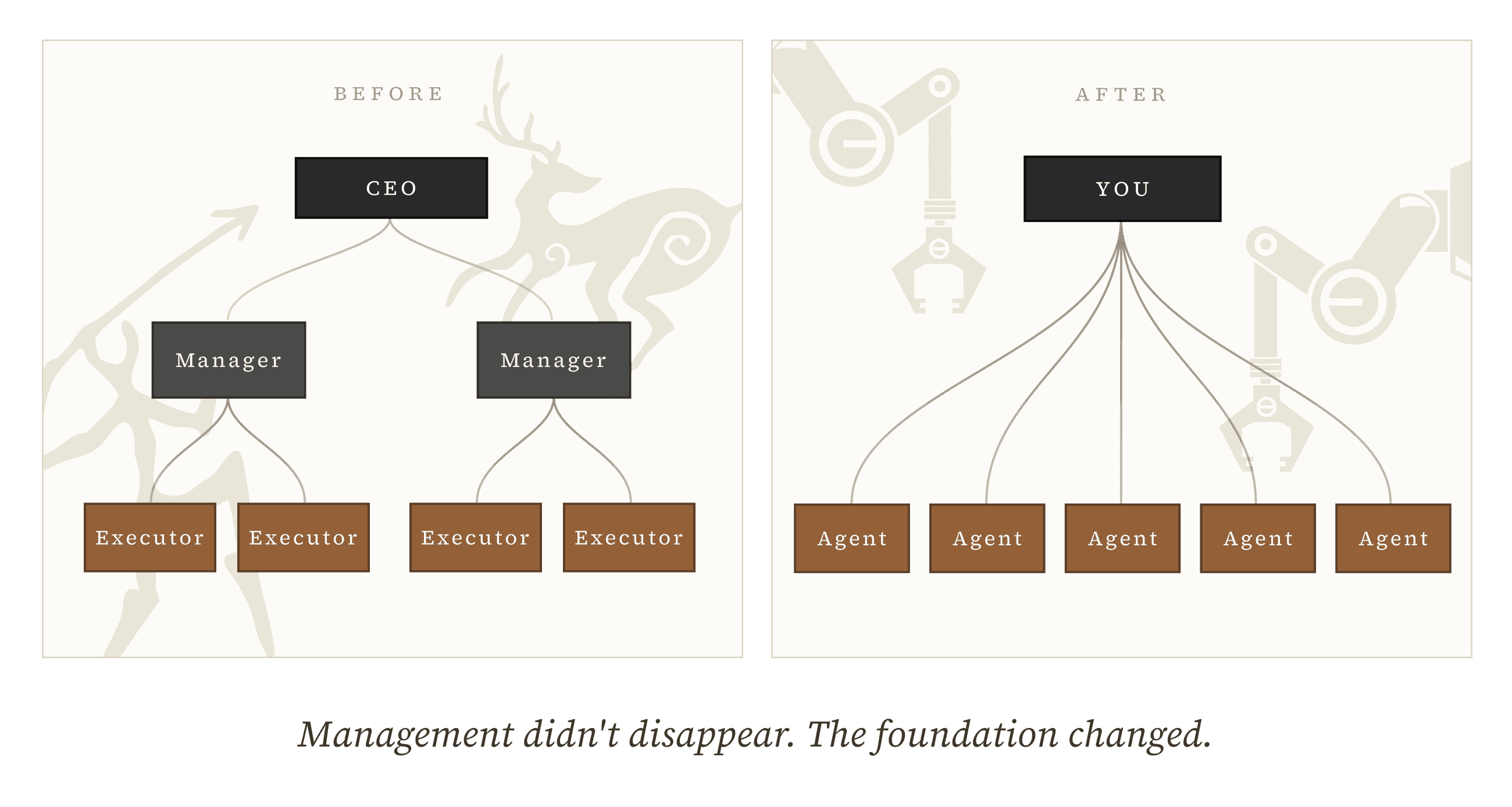
Quick context first. I wrote earlier on why you have to compress your output for higher management: the higher the manager, the more fragmented their attention. Your manager doesn't expect you to be thorough. They expect you to be sharp within your scope, so they can in turn be sharp for their manager. You can be the most legendary ultra-smart folk out there, but if you can't help your manager make a decision in the shortest text possible — you lose. This is how companies actually work, all the way up.
Now to LLMs and agents.
I separate the two on purpose. An agent becomes an agent not because of the task you give it, but because of the mindset you bring. Agency is something you confer, not something the system has. The drama around "how can you blindly accept an agent's plan!" almost always comes from people who have never managed others at scale.
Take a simple example. You're organizing your birthday party, 30+ guests. Whatever you visualize, the more steps you stack, the more orchestration you'll see. You trust the pizza place to deliver on time. You trust Joey to bring his stereo. You trust Helen who said she'd bring her friend Matt — "and you'll like him so much!" You even trusted Bryan from school who said "I'll do something. Won't tell you what, but I promise you'll love it!"
Look closely at this so-called simple event and you see an enormous amount of trust placed everywhere. With every important piece, you stayed brief, gathered the minimum context, and moved on. This isn't about whether you're a control freak or "generally trustful." This is just how things work once you put them at scale.
Same with agents. You can ask Claude to refine an email or research the top 5 lightweight laptops of 2026 — fine, but that's a tool. Claude becomes your agent when you tell it to compose summaries for each laptop, pull your last 20 Telegram contacts, filter for friends, and send those summaries out — autonomously.
Now go one level deeper. You have one agent. It does a job. You trust its output and its actions. Good start. But the bottleneck of running a one-person setup isn't cost anymore — agents are cheap. The bottleneck is you. Going from one agent to three forces you to ask: what would I even hire this new one for? That question — that primitive — is what scales you now. If you can't get past one agent, on average you'll lose to people who can.
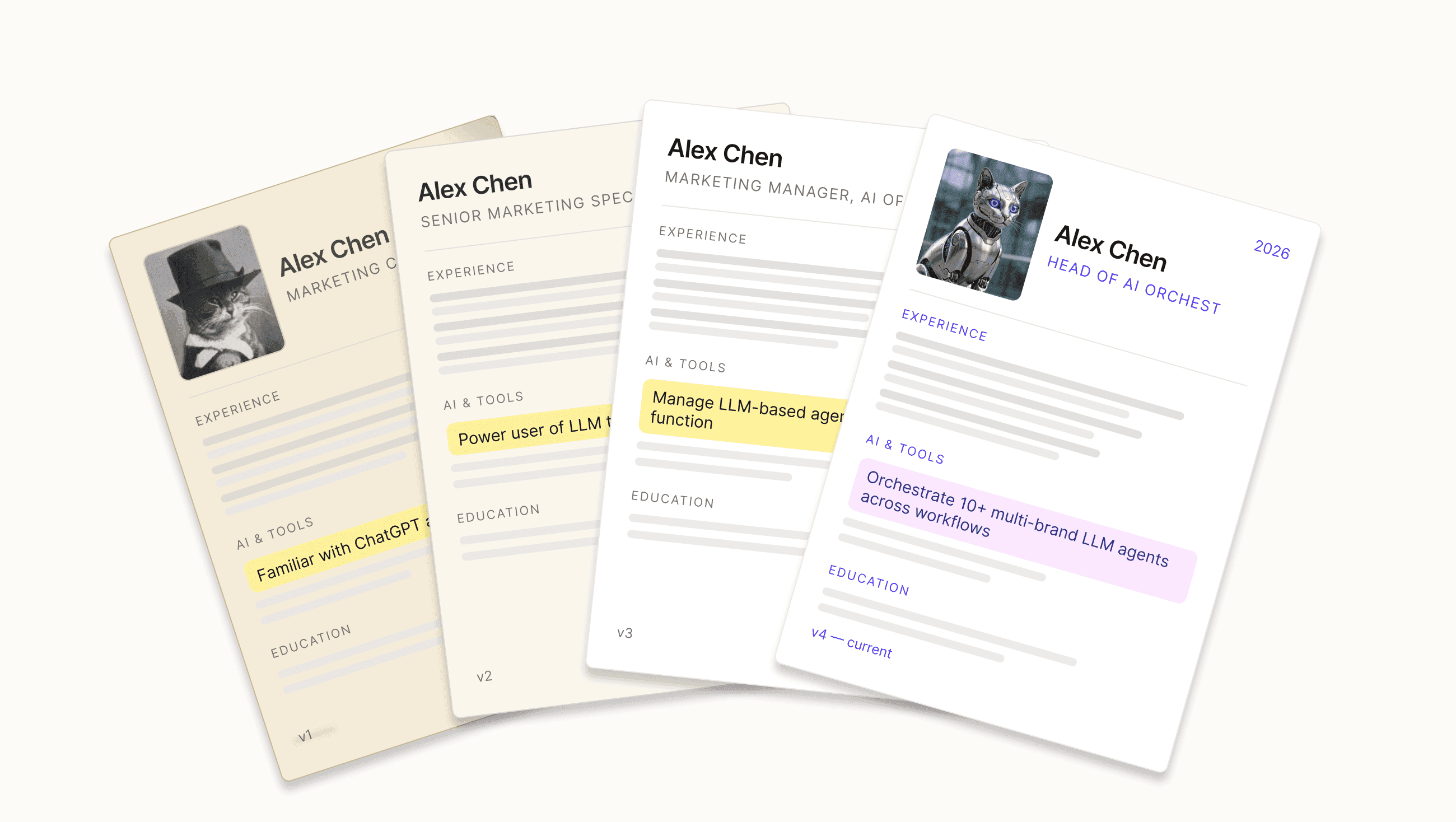
This is the part most people miss. Your CV today says "I know Claude, I know ChatGPT." Your competitor's CV says "I manage LLM-based agents within my function." The next one says "I orchestrate five agents across providers." The one after that — ten.
By the time your "advanced with ChatGPT" lands on the table next to "I run 10 multi-brand LLM agents," the decision is already made. You don't lose because you didn't use AI. You lose because you used it the way everyone else did.
You won't lose your job to AI. You'll lose it to someone exactly like you - who learned to manage agents.
This is what's happening right now.
Later on I’ll write on the orchestration topic. Still many things are in movement, but I’ll be explaining how can you go from 1 agent to 5, 10, and beyond. Have some homework to do myself first, to be precise.
Stay safe. Learn and grow with us. Thanks.
Wolf Alexanyan